Inclusive hosting
Plan for access and sensory comfort from the beginning
Access is part of the plan, not a special request someone has to negotiate later.
Editorial guide · Reviewed July 2026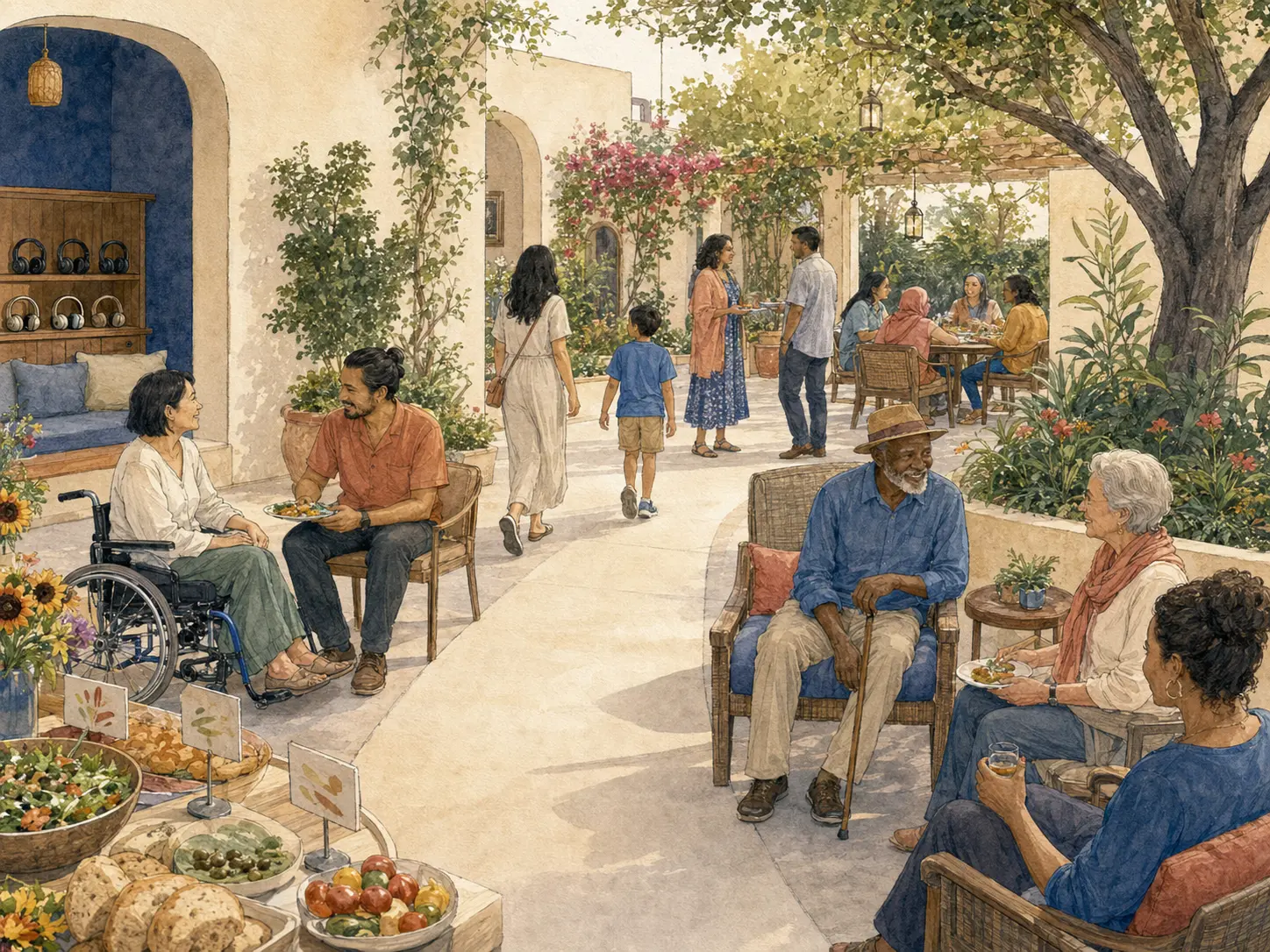
Share useful details early
Describe entrances, seating, bathrooms, transportation, surfaces, food, timing, noise, lighting, and who to contact with questions. Clear information lets guests decide what they need.
- Name step-free routes accurately
- Offer a quiet-space description
- State the event length and meal timing
Design for different ways of participating
A guest should be able to sit, step out, communicate differently, arrive late, leave early, or decline an activity without becoming the focus.
- Keep routes and aisles clear
- Use readable signs and labels
- Provide seating with varied support
Ask, do not assume
The person experiencing the barrier is the best guide to their needs. Ask practical questions privately and do not require a diagnosis or explanation.
- Offer specific options
- Protect privacy
- Follow through on what you promise
Useful source